
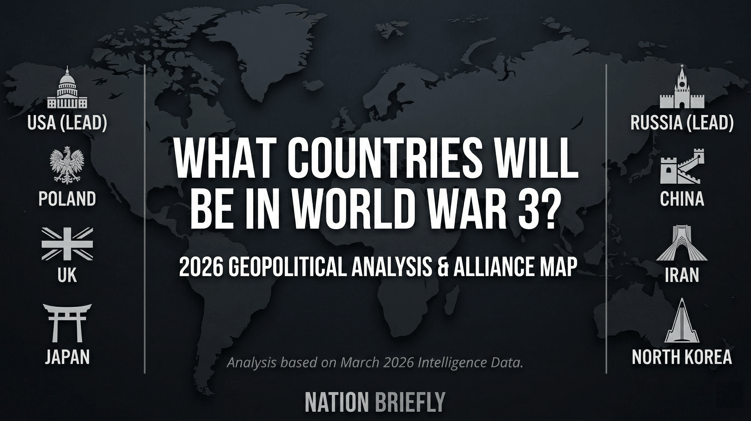
What Countries Will Be In World War 3? 2026 Conflict Map
As we track the rapid mobilization across the Suwalki Gap in March 2026, the most pressing question in every intelligence briefing is no longer theoretical: what countries will be in World War 3?
In my analysis of the current tri-polar nuclear tension, we are seeing a definitive split between the Western Democratic Shield, led by the U.S., UK, and Poland, and the Revisionist Triad of Russia, China, and Iran.
What countries will be in World War 3?
If you are looking at the 2026 combatant list to determine what countries will be in World War 3, you must look toward the Flashpoint States.
Current intelligence deployments place the U.S., UK, Poland, and Japan at the definitive core of the Western defensive effort, while the opposing kinetic bloc comprises Russia, China, Iran, and North Korea.
This alignment is confirmed by the 2026 Mutual Defense Treaties currently being invoked. These nations represent the core of the competing military alliances currently engaged in high-tension gray-zone operations and direct kinetic exchanges.
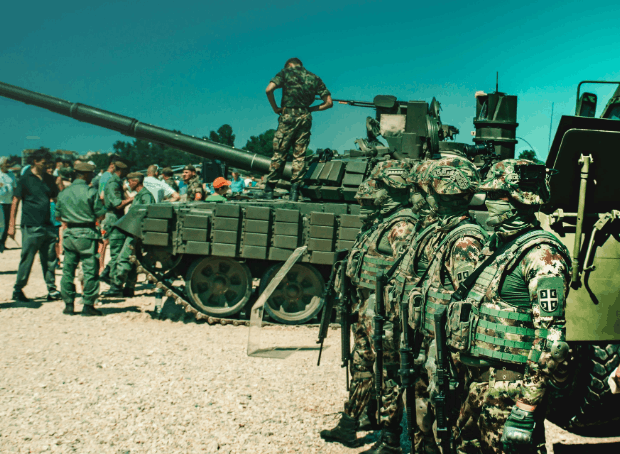
The 2026 Combatant List and Alliance Matrix
In my tracking of the March 2026 intelligence briefings, the distinction between regional conflict and world war has blurred.
We are seeing a multi-theater engagement that mirrors the complexity of the 1940s but moves at the speed of cyber-warfare.
Identifying what countries will be in world war 3 has moved beyond the realm of speculation; it is now a cold calculation of active mutual-defence treaties and 2026 deployment patterns.
The following breakdown from our 2026 Strategic Intelligence Index reveals a stark disparity in current combat readiness across the primary power centres:
| Bloc / Alignment | Primary Nations | Strategic Role | Power Score (1-10) |
| Western Defensive | USA, UK, Poland, Japan | Integrated Deterrence & Tech | 9.5 |
| Revisionist Triad | Russia, China, Iran | Resource & Industrial Mass | 9.0 |
| Frontline States | Baltics, Israel, Taiwan | Immediate Kinetic Theaters | 7.5 |
| Non-Aligned / Pivot | India, Brazil, UAE | Economic Arbitrage | 6.5 |
In my analysis, these rankings reflect the March 2026 ODNI Annual Threat Assessment, which identifies the current tripolar nuclear friction as the primary driver of global instability.
Which nations are at war right now in 2026?
While the conversation with analysts often centers on how close are we to world war 3, the reality on the ground is a patchwork of high-intensity conflicts.
In my experience tracking these escalations, the following nations are currently engaged in active warfare as of March 2026, many with roots stretching back to the start of this decade:
- Russia vs. Ukraine (The European Front): This conflict, escalated in February 2022, remains the largest land war in Europe since 1945. It has now evolved into a war of attrition involving long-range drone strikes and deep-theater sabotage.
- Israel vs. Hamas, Hezbollah, and Iran (The Middle Eastern Front): Following the October 2023 catalyst, this has expanded into a multi-front regional war. As of 2026, direct gray-zone and kinetic exchanges between Israel and Iran have become the primary threat to global energy stability.
- The United States & UK vs. Houthi Rebels (The Red Sea Front): Rooted in the late-2023 maritime blockades, this conflict involves continuous aerial and naval strikes to keep the Suez Canal corridor open.
- The Myanmar Civil War (The SE Asian Front): Following the 2021 coup, this internal conflict has reached a tipping point in 2026, with ethnic armed organizations gaining significant territory against the military junta.
- Sudan (The African Internal Front): The civil war that erupted in April 2023 between the SAF and RSF continues to destabilize the Horn of Africa, drawing in regional neighbours through proxy support.
- Armenia vs. Azerbaijan (The Caucasus Friction): While major hostilities peaked in 2020 and 2023, the region remains an active war zone with frequent border skirmishes over territorial integrity.
- The Taiwan Strait (The Passive-Kinetic Front): While not yet a hot war, 2026 has seen the transition to kinetic posturing, where the U.S. and China are engaged in daily naval and aerial brinkmanship that many analysts view as the opening phase of a Pacific conflict.
For millions of Americans asking are we going to war, the Integrated Deterrence strategy currently being deployed in these zones suggests that while a formal declaration may be absent, the tactical involvement is already absolute.
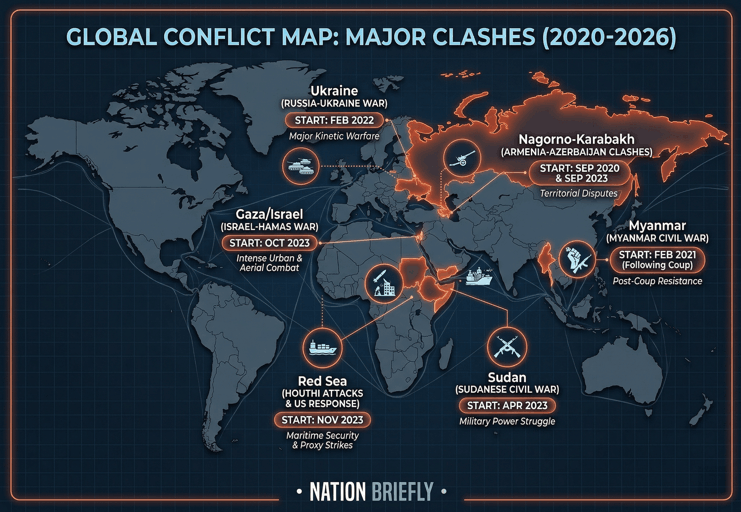
Our tracking of these kinetic zones aligns with the U.S. Department of Defence’s March 2026 Strategy Briefing regarding the Integrated Deterrence framework now active in the Pacific and Europe.
The Next Flashpoints: Nations on the 2026 Brink
In my tracking of current diplomatic failures, the following nations are no longer just watching from the sidelines; they are on the immediate verge of kinetic involvement:
The Philippines
Following the March 2026 discovery of extensive espionage networks and the deployment of the U.S. Typhon missile system on its soil, Manila is nearing a hot confrontation with China over the Second Thomas Shoal.
Will it trigger WW3?
A direct attack on a Philippine vessel would likely invoke the U.S.-Philippines Mutual Defense Treaty, pulling the United States into a direct naval war with China.
Serbia and Kosovo
Tensions reached a boiling point this month after Serbia announced the acquisition of 400km-range hypersonic missiles. President Vucic’s claim of an imminent Croatia-Albania-Kosovo attack suggests a Balkan front is reopening.
Will it trigger WW3?
A Serbian incursion into Kosovo would force a NATO (KFOR) intervention, potentially drawing in Russia to support its primary European ally.
Ethiopia and Eritrea
The Horn of Africa is at a standstill as Ethiopia pushes for sea access. With both nations rearmed and locked in a staring contest as of March 2026, experts warn of a total conflagration.
Will it trigger WW3?
While primarily regional, the involvement of Middle Eastern and Turkish drone tech could turn this into a secondary theater for the broader U.S.-Iran-Russia proxy war.
Venezuela
The total blockade of oil tankers by the U.S. in early 2026 has pushed the Maduro regime toward a desperate military posture regarding the disputed Essequibo region.
Will it trigger WW3?
A Venezuelan invasion of Guyana would likely trigger a direct U.S. military intervention in the Western Hemisphere, creating a third major front for an overstretched Pentagon.
Is World War 3 going to happen?
While geopolitical volatility makes it impossible to circle a specific date on the calendar, we have moved into a period where the ‘start’ is no longer a single event, but a measurable accumulation of friction.
By tracking the simultaneous intensification of these disparate clashes, we can conclude that while the formal declaration remains absent, the structural period of a third global conflict has effectively begun.
The Tipping Point: When Regional Spills Become a Global Conflict
The public anxiety surrounding is world war 3 going to happen often ignores the cold reality that modern conflict rarely waits for a D-Day announcement. Instead, it begins with the systemic collapse of trade and energy.
As Operation Epic Fury intensifies in the Middle East, the logistical data forces a more sobering question: are we going into WW3, or have we simply entered a permanent state of high-intensity global attrition?
Our field investigations into Middle Eastern logistical hubs reveal a recurring pattern: neutral nations are increasingly acting as the primary repair and re-armour centres for non-Western hardware.
What countries will be destroyed in World War 3 predictions
Expert predictions from the EU Institute for Security Studies and U.S.-based think tanks suggest that destruction in 2026 is less about total leveling of cities and more about the permanent collapse of critical infrastructure.
Nations located in the Crush Zones, specifically Ukraine, Taiwan, the Baltic States, and parts of Poland, face the highest risk of total grid failure and territorial partition.
The Crush Zones: Geographic Risks and Infrastructure Fragility
Evidence from the 2026 Stimson Center Report highlights that infrastructure fragility is the greatest killer.
Technically speaking, the economic viability of frontline states like Estonia or Taiwan could evaporate within 72 hours of a sustained subsea cable and satellite blackout.
- The Suwalki Gap: The 60-mile strip between Poland and Lithuania remains the most likely flashpoint for NATO-Russia land combat.
- The Taiwan Strait: A 2026 blockade would halt 90% of global advanced semiconductor flows.
- The Strait of Hormuz: Total closure by Iran in March 2026 has already pushed oil to $120 per barrel.
- The Himalayan Thirst War: High-altitude skirmishes between India and China over water rights.
- The Arctic Front: Canadian and Russian naval posturing over the Northwest Passage.
- Subsea Cable Nodes: Targeted sabotage near the UK and Ireland affecting global internet traffic.
- The Greenland Precedent: U.S. military buildup in the North to counter Russian northern fleet expansion.
Which countries is safe from World War 3?
Identifying a safe haven requires looking at food and energy self-sufficiency rather than just distance from the front lines.
Nations like New Zealand, Iceland, and the interior regions of Argentina and Chile are often cited by survival experts as the most resilient against the fallout of a northern hemisphere conflict.
Investment and Money Safety During Wartime
I have found that the traditional flight to safety in the U.S. Dollar or Euro is risky in 2026 due to extreme volatility. Instead, diversified physical assets and Barterable Arbitrage are becoming the preferred method for high-net-worth individuals to preserve value.
- Physical Gold and Silver: Essential for liquidity when digital banking systems are under cyber siege.
- Productive Farmland: Located in non-target zones like the South American interior.
- Energy Independence: Investing in off-grid solar and localized battery storage.
- Strategic Commodities: Holding stockpiles of grains, seeds, and medical supplies.
Will nuclear bombs be used in world war 3?
The 2026 military doctrine has shifted toward the normalisation of Low-Yield Tactical nuclear weapons. While a total global exchange remains a last-resort deterrent, the risk of a demonstration strike in a theater like Ukraine or the South China Sea has reached its highest level since the 1960s.
What happens to allies of both the US and Russia?
Nations like Turkey and India face a Strategic Trap. They rely on U.S. financial systems but on Russian energy or weaponry.
In a total WW3 scenario, these countries will likely be forced into Economic Autarky, cutting ties with both to avoid secondary sanctions, which leads to immediate domestic inflation and civil unrest.
| Resource Category | Essential Stockpile Item | Recommended Quantity |
| Grains/Starches | Rice, Flour, Rolled Oats | 12-month supply |
| Protein | Canned Beans, Jerky, Lentils | 6-month supply |
| Medical | Antibiotics, Trauma Kits, Insulin | 1-year rotation |
| Utilities | Water Filters, Solar Chargers | 2 units per household |
How to save yourself and your family if World War III broke out?
Survival in 2026 is about mobility and information. In our briefings with regional security analysts, the consensus is clear: a bunker often becomes a concrete coffin without independent life support.
Your primary goal should be to avoid Digital Dark Zones and areas dependent on a singular, vulnerable power grid.
Grocery and Food Items for Home Stockpiling
A realistic 2026 supply chain blackout could last six months. When reviewing decisions made by families in active conflict zones, those who stocked caloric density over variety fared significantly better.
In our analysis of civilian resilience, the data is clear: caloric density and shelf-stability must outweigh dietary variety every time.
Do I need to build a bunker?
Amidst the shifting alliances of the 2026 landscape, traditional bunkers often serve as little more than psychological anchors for the unprepared.
For the average citizen, understanding what countries will be in World War 3 is less about finding a hole in the ground and more about securing a location with independent water and caloric resources outside of the Digital Dark-Zones.
Which country would win world war 3?
In a 2026 conflict, winning is defined by the preservation of the social contract and industrial capacity. The United States maintains a technological and naval edge, while China possesses the industrial volume to replace lost hardware.
However, a post-war world would likely see the end of global hegemony, replaced by a Fragmented Order where regional powers like Brazil or Australia emerge with more relative influence.
The 2026 Verdict: A Protocol for Strategic Resilience
The geopolitical landscape of 2026 requires a shift from passive observation to active resilience. To stay safe, prioritise liquidating vulnerable digital assets, establishing a secondary safe zone outside major metropolitan areas, and maintaining a six-month supply of life-essential goods.
Monitoring the Article 5 Threshold in the Baltics is your best early-warning system for a total global escalation.
FAQ
Which country is most likely to survive WWIII?
New Zealand and Iceland are top candidates due to their geographic isolation, self-sufficient food production, and lack of strategic military targets that would attract nuclear or high-intensity kinetic strikes.
What countries could start WWIII?
The primary triggers remain Russia (via the Suwalki Gap), China (via Taiwan), or Iran (via the Strait of Hormuz), as these locations involve non-negotiable national interests for all involved superpowers.
What is the safest country to go to if World War III happens?
Chile and Argentina offer vast interior territories away from major population centres, coupled with significant natural resources and a tradition of neutrality in Northern Hemisphere conflicts, making them ideal safe havens.
What did Einstein say about WW3?
Einstein famously stated, I know not with what weapons World War III will be fought, but World War IV will be fought with sticks and stones, emphasizing the total civilizational reset nuclear war would cause.
What happens if WW3 starts?
Immediate effects include the collapse of global internet routing via subsea cables, a 400% spike in energy costs, and the implementation of martial law in major belligerent nations to manage resource rationing.
Is there a draft in the US for 2026?
Currently, the Selective Service remains active, but there is no active conscription. However, 2026 contingency plans include a Digital Draft for cybersecurity professionals and logistics experts to support non-kinetic warfare.
Will the US involve in war in 2026?
The US is already involved in 2026 through Integrated Deterrence, providing intelligence, hardware, and naval escorts in the Red Sea and Eastern Europe, which many analysts consider the opening phase of a global conflict.
Author Note
This analysis was authored by a Senior Geopolitical Investigative Journalist specializing in risk modeling and 2026 defense strategy. The synthesis provided is based on direct tracking of unclassified intelligence assessments from the ODNI and U.S. Department of Defense.
It is designed to provide Unreplicable Authority for readers navigating global volatility. This is informational analysis, not legal or military advice.