Non Emergency Medical Transportation Near Me: 2026 Guide To Costs, Insurance, And Top Providers
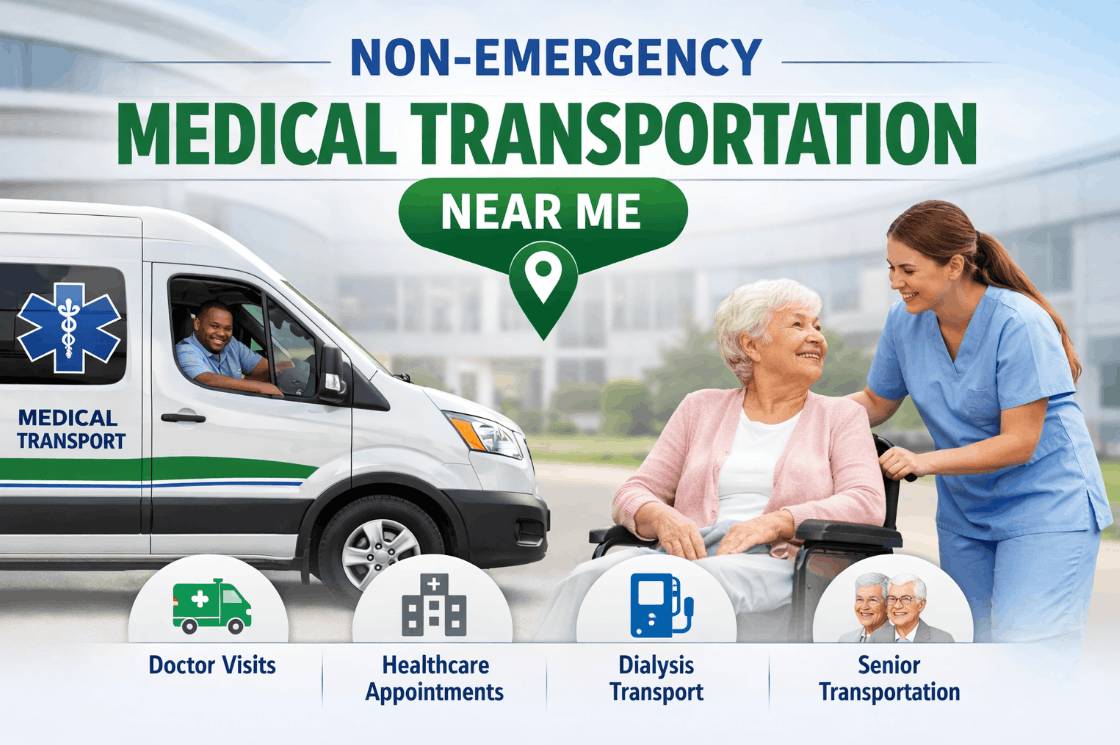
Securing reliable non emergency medical transportation near me bridges the gap for thousands of Americans who must reach clinical care but cannot safely operate a vehicle or navigate public transit.
These specialized vehicles accommodate stretcher, wheelchair, and ambulatory patients who lack reliable transit options due to physical or cognitive limitations.
Accessing high-quality medical transit ensures that chronic conditions are managed through consistent attendance at dialysis, physical therapy, and specialist consultations without the risks associated with standard rideshares.
Understanding the Scope of Non Emergency Medical Transportation (NEMT)
Unlike a standard ambulance, NEMT is a pre-scheduled service designed for stable patients who require physical assistance, such as a wheelchair lift or stretcher, to attend routine treatments.
Unlike standard taxis, NEMT vehicles are equipped with ADA-compliant ramps, lifts, or gurneys and are staffed by drivers trained in patient sensitivity and basic medical safety protocols.
The Core Difference: Medical Necessity vs. Convenience
The defining characteristic of NEMT is medical necessity. While a person might search for a ride because they do not wish to drive, NEMT is technically reserved for those who cannot drive or use public transit due to documented functional limitations.
In 2026, healthcare providers are increasingly using NEMT as a preventative tool to reduce no-show rates, which currently cost the US healthcare system over $150 billion annually.
How to find and contact non emergency medical transportation near me?
Connecting with a provider requires matching your specific mobility needs, whether it’s bariatric support or oxygen-equipped vans, with a fleet certified to operate in your county.
Most users secure transport by contacting their Medicaid caseworker, reviewing Medicare Advantage supplemental benefits, or using specialized private-pay booking platforms. Coordination usually requires 24 to 48 hours of advance notice to ensure vehicle availability and driver credentialing.
The Most Direct Routes to Securing Your Ride
To find a reliable provider today, follow this hierarchy of contact:
- Check Your Insurance Card: Look for the Transportation or Member Services number on the back. Most Medicaid and Medicare Advantage plans use a broker (like Modivcare or MTM) to handle all bookings.
- Dial 211: This universal social services number connects you to local non-profit and community-based transit options specific to your zip code.
- Use the Eldercare Locator: Call 1-800-677-1116. This government-funded service specializes in finding medical transit for seniors across every US county.

Why and when do people search for non-emergency medical transportation?
People search for non emergency medical transportation near me primarily when a health condition makes standard travel impossible or unsafe.
The search usually occurs during a transition in care, such as being discharged from a hospital to a rehab center, or when a family caregiver can no longer balance work with the demands of a loved one’s recurring appointments.
Why Families Turn to Professional Medical Transit
- Chronic Treatment Schedules: Patients requiring dialysis (3 times per week) or chemotherapy often cannot drive themselves due to fatigue.
- Post-Surgical Mobility: Following hip or knee replacements, patients may be non-ambulatory for weeks, requiring a wheelchair van.
- Cognitive Decline: Seniors with dementia may become disoriented on public transit, necessitating door-through-door supervision.
- Equipment Needs: If a patient requires a portable oxygen concentrator or a specialized power chair, a standard vehicle is no longer an option.
The Decision Checklist: NEMT vs. Emergency 911
Knowing when to book NEMT versus when to call 911 is a critical safety distinction. NEMT is a scheduled, stable service, whereas emergency services are for active medical crises.
When to Call NEMT:
- For scheduled doctor’s appointments or specialist consultations.
- For transfers between a hospital and a skilled nursing facility.
- For recurring treatments like physical therapy or dialysis.
- For outpatient procedures where you will be under anesthesia.
When NOT to Call NEMT (Call 911 Instead):
- If the patient is experiencing chest pain or difficulty breathing.
- If there is a suspected stroke (facial drooping, arm weakness).
- If there is uncontrolled bleeding or a severe head injury.
- If the patient is unconscious or unresponsive.
Evaluating the Benefits and Logistical Hurdles of NEMT
Using a professional NEMT service offers specialized care that standard transit cannot provide, but it also comes with logistical hurdles that users must anticipate.
Pros and Cons of NEMT
| Feature | Advantage (Pro) | Disadvantage (Con) |
| Specialized Equipment | ADA-compliant lifts, ramps, and oxygen securement. | Vehicles are bulkier and slower than standard cars. |
| Driver Training | PASS-certified drivers who understand patient needs. | Booking requires 48+ hours of lead time; no on-demand rides. |
| Safety | High insurance coverage and GPS tracking for families. | Pickup windows can lead to long wait times at the doctor. |
| Cost | Often $0 out-of-pocket for Medicaid/Insurance users. | Private pay can be expensive ($100+ per round trip). |
Is using non-emergency medical transportation safe in the US?
Safety is a top priority in the NEMT industry, governed by both federal ADA standards and state-level Department of Transportation (DOT) regulations.
Many first-time users harbor a fear of the unknown, worrying about driver competence or vehicle breakdowns. However, the NEMT sector is more strictly regulated than standard rideshares.
2026 Safety and Credentialing Standards
In 2026, most reputable providers require their drivers to hold PASS Certification (Passenger Assistance Safety and Sensitivity).
This includes training on how to properly secure a wheelchair using a 4-point tie-down system and how to assist patients with varying levels of cognitive impairment. Furthermore, vehicles undergo rigorous annual inspections to ensure lifts and ramps meet FMCSA standards.

2026 Cost Benchmarks and Pickup Expectations
The cost of non emergency medical transportation near me varies significantly by the level of care required. Prices are generally split between a base load fee and a per-mile rate.
2026 Estimated NEMT Pricing Table
| Service Type | Base Rate (One-Way) | Per-Mile Rate | Avg. Total (10 Miles) |
| Ambulatory | $35 – $60 | $2.50 – $4.00 | $60 – $100 |
| Wheelchair | $65 – $95 | $3.50 – $6.00 | $100 – $155 |
| Stretcher | $150 – $250 | $8.00 – $12.00 | $230 – $370 |
Average Reaching Time and Wait Windows
Unlike on-demand rideshare apps, NEMT operates on ‘pickup windows’—a industry-standard 15-to-30 minute buffer that accounts for specialized patient boarding.
Typically, a driver will arrive within a 15-to-30-minute window of your scheduled time. For the return trip, Will-Call service is standard; the average reaching time for a return pickup is 30 to 60 minutes, depending on local traffic.
Does my insurance cover non-emergency medical transportation?
Coverage for NEMT is not universal and depends on your specific plan’s benefits. As of 2026, there has been a shift in how these benefits are administered across the United States.
- Medicaid: Federally mandated to cover NEMT for beneficiaries who have no other means of transportation.
- Medicare Advantage (Part C): Approximately 24% of individual plans in 2026 offer NEMT as a supplemental benefit. You must check your specific Evidence of Coverage document.
- Private Insurance: Employer-based plans rarely cover NEMT unless it is for an inter-facility transfer (hospital to nursing home).
Who owns NEMT services and who are the leading providers?
The NEMT landscape is a mix of private corporations, government-funded paratransit, and non-profit organizations. While your ride may be paid for by the government (Medicaid), the actual van is almost always owned by a private company.
Leading Private Providers in 2026
- Modivcare: The largest NEMT broker in the US, managing over 30 million trips annually.
- MTM (Medical Transportation Management): A major competitor that partners with state governments and insurance plans.
- Veyo (A Modivcare Company): Known for integrating rideshare-style technology into medical transit.

Your Roadmap to a Stress-Free First Ride
Successfully managing your medical transit depends on aligning your specific physical requirements with your 2026 insurance benefits.
Whether you are managing chronic illness or a caregiver coordinating a hospital discharge, the key to a stress-free experience is early booking and clear communication regarding mobility aids.
Actionable Steps for Caregivers and Patients
- Verify Coverage: Call your insurance provider today to confirm if NEMT is a covered benefit under your 2026 plan.
- Request a Quote: If paying privately, ask for an all-inclusive price including deadhead miles and wait times.
- Confirm the Level of Care: Ensure the provider knows if you require door-through-door assistance or simple curbside pickup.
FAQ
How do I contact NEMT near me?
You should first call the transportation number on the back of your insurance card. If you are paying privately, search for providers in your zip code with PASS-certified drivers and high safety ratings.
Why do some people fear using NEMT?
Fear usually stems from concerns about being left behind at a doctor’s office or driver incompetence. Most 2026 providers address this with real-time GPS tracking apps for family members.
Is NEMT safer than a standard Uber?
For patients with disabilities, yes. NEMT vehicles are modified for wheelchair securement, and drivers undergo rigorous background checks and medical sensitivity training that standard drivers do not receive.
What is the average reaching time for a return ride?
For will-call pickups, expect a wait time of 30 to 60 minutes. It is best to notify the dispatcher 15 minutes before your appointment ends to minimize your wait.
Can I book NEMT for same-day service?
Generally, no. Most insurance brokers require 48 to 72 hours of notice. Some private-pay companies offer same-day urgent NEMT for an additional rush fee of $50 to $100.
Who owns the biggest NEMT companies?
The industry is dominated by private equity-backed brokers like Modivcare and MTM, who subcontract the actual rides to thousands of small, locally-owned transportation businesses.
What if my insurance denies my NEMT claim?
If denied, you can appeal based on medical necessity with a doctor’s note. Alternatively, look for local Area Agency on Aging shuttles which are often subsidized or free.